When Duct Cleaning Is Worth It — and the Cases Where We'll Tell You Not To
The EPA does not recommend it as routine maintenance. We agree. Here are the specific situations where it genuinely helps, and the test you can run yourself in a minute.
This is the question we get asked most and the one our industry answers least honestly. The EPA's position is that duct cleaning has never been shown to prevent health problems and should not be performed as routine maintenance. We clean ducts for a living and we think that is broadly correct — which is why this is about the cases where it is not.
01The test that settles it, and it is free
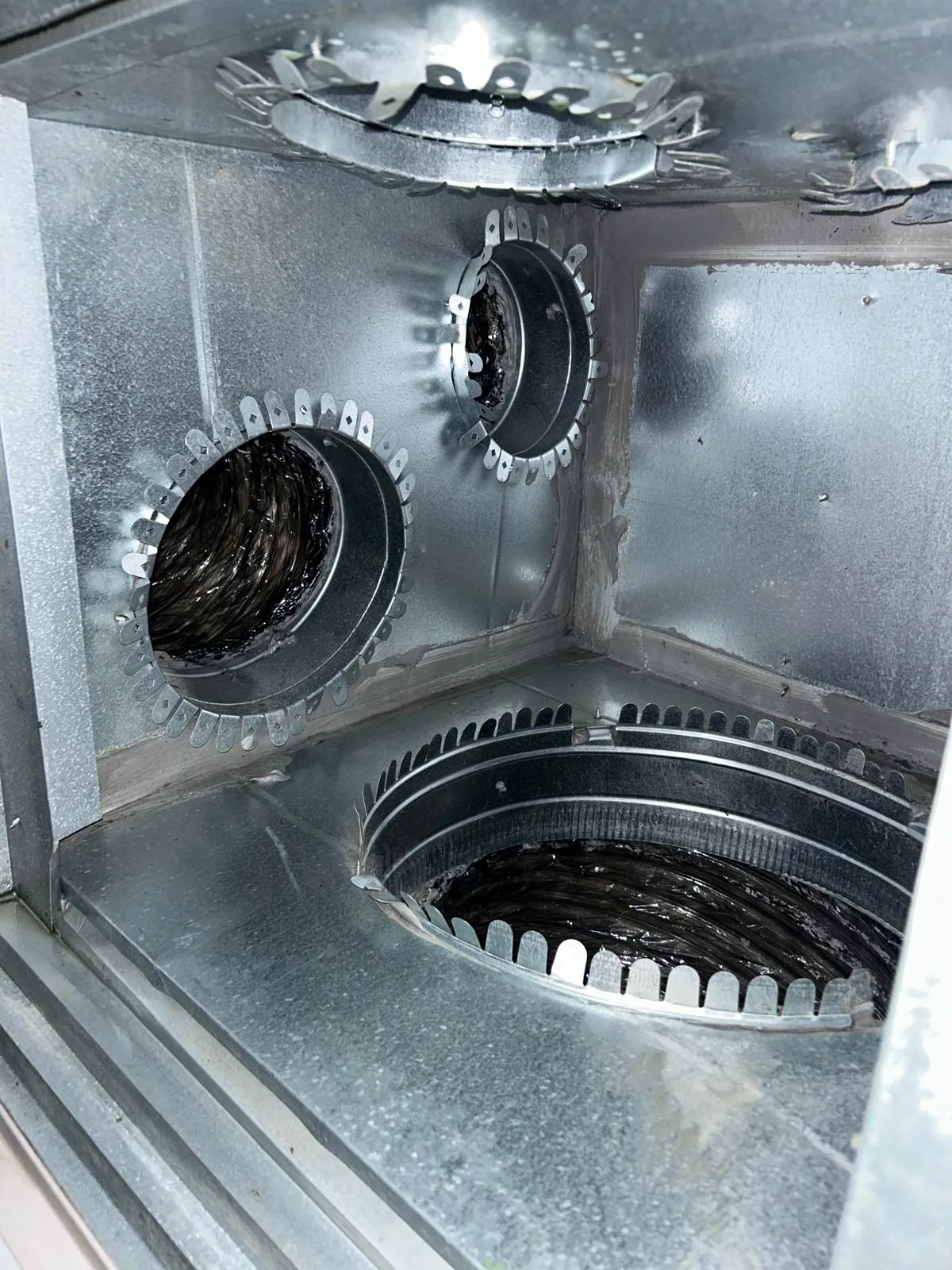
Pull a supply register and look inside with a torch. If you can see bare metal, you do not need duct cleaning. If you see a felt of dust, or visible debris, you do.
Also look at the return grille and the filter slot. Those tell you whether the system has been filtering properly, which is what actually determines how dirty ducts get.
02Where it genuinely helps
Visible contamination — construction debris, insulation fragments, rodent or insect residue, or matted dust. There is no other way to remove it.
After an event: a renovation, a fire, an infestation, or a period run with no filter installed. The system is holding material that will keep re-entering the house.
And genuine airflow restriction from accumulation — less common than assumed, but real in systems run for years with poor filtration.
03Where it does not help
Ordinary household dust. Most of it is generated inside your house continuously and settles on surfaces faster than it circulates through ductwork. Cleaning does not change that, and the improvement people report is usually short-lived.
Allergies as a general proposition — there is no good evidence routine cleaning improves symptoms in a typical home. Filtration and source control do considerably more for less.
And a fouled coil or blower wheel, which affect airflow far more than ducts do and are not reached by cleaning ducts.
04What a legitimate cleaning actually involves
Source removal: the system under negative pressure, every run agitated mechanically so debris is extracted rather than redistributed. That requires access openings cut into trunk and plenum, and those openings resealed properly afterwards.
A price that could not cover two hours of labor is a register vacuuming. That is a different service, and it is where the industry's reputation comes from.
05What we would rather sell you first
A filtration upgrade in most cases — a deep media cabinet changes what enters the system continuously rather than removing what is already there once, and it does so at lower airflow resistance than a thin high-MERV filter.
Then sealing, if the assessment shows leakage. A leaky return draws attic air, and attic air is where a lot of the dust originates. Cleaning a system that is drawing from an attic is treating the symptom on a schedule.
Look in a register before you buy anything. Visibly dirty means cleaning is worth doing properly and once. Clean metal means your money is better spent on filtration and sealing — and any company unwilling to say that is not the one to hire.
Every recommendation in this guide starts from one place: a graded, photographed inspection. Book a system assessment and pair it with a full-system air duct cleaning — one standard, one paper trail, every job.