
Duct Work Across A Property, Unit By Unit
Turn cleanings, resident complaint calls, and whole-property condition surveys, run on your access rules and documented one unit at a time. Camera first, so the budget goes to the units that need it.
COI, additional-insured endorsement, and W-9 go into your vendor file before the first work order is written.
Three different work orders wearing one name.
“Duct cleaning” on a managed property means at least three unrelated jobs with different urgency, different access, and different money attached. Scoping them as one is where vendor relationships go wrong.
The turn
Carpet is out, paint is drying, and there is a window before the next lease starts. That is the cheapest hour anyone will ever spend in that unit — no notice period, no resident schedule, nothing to mask off. A turn cleaning is a full source-removal pass on the supply and return runs, registers off and washed, both plenums, fresh filter, camera-verified. Most single-system units are done inside a workday.
The complaint
Dust settling back on furniture a week after housekeeping, or a smell that shows up the moment the air kicks on. A fair share of these are not the ductwork at all — they are a wet condensate pan, a return pulling attic air through a torn run, or a filter nobody has changed. We camera the runs and the coil compartment, put the cause in writing with photos, and name the trade that owns the fix even when it is not us.
The survey
You took over a property, or an owner wants a number for what the ductwork will cost over the next few years. We scan a sample or every unit, whichever you buy, and write a per-unit condition list: crushed flex behind a truss, disconnected returns, boots that have pulled away from the drywall, coils holding water. It is built to be pasted into a capital plan, not to sell a cleaning.
A camera pass usually shortens the list you sent us.
The EPA’s published position is that duct cleaning answers a condition — visible growth, vermin, heavy debris — rather than a date on a calendar. Run a real borescope pass across a property and the list splits. Ground-floor units next to a construction gate are loaded. Third-floor units cleaned two seasons ago are still sitting clean. We photograph both and only the first group gets cleaned.
That has an obvious consequence worth saying out loud: if what you want is a flat annual sweep of every unit whether or not it needs one, we are the wrong vendor. Plenty of companies will sell that and the invoice is bigger. Tell us that is the requirement on the first call and we will say no rather than quote it.
What we will do is inspect everything you ask us to inspect, hand you the photo for every unit we left alone, and re-check those units on the next rotation so a change shows up as a change.
Five steps, and the order is the point.
Vendor file, then access rules
Onboarding happens before scheduling, not on service day: an insurance certificate naming whichever entities you specify as additional insured, plus a W-9, loaded into your compliance portal if that is how your file works. In the same conversation we write down your access rules — notice period, who holds keys, whether maintenance escorts, and what you want done when a resident says no. Those rules go on the work orders so a technician never improvises entry.
Count systems, not doors
A unit count does not describe the job. In garden-style buildings one unit is usually one air handler and one duct tree, which is a residential cleaning repeated. In a mid-rise served by fan coils on a common riser, the in-unit work is small and the shared duct is the real scope. We walk each building and write down which it is, because the two price and schedule nothing alike.
Camera pass before anything is scheduled to be cleaned
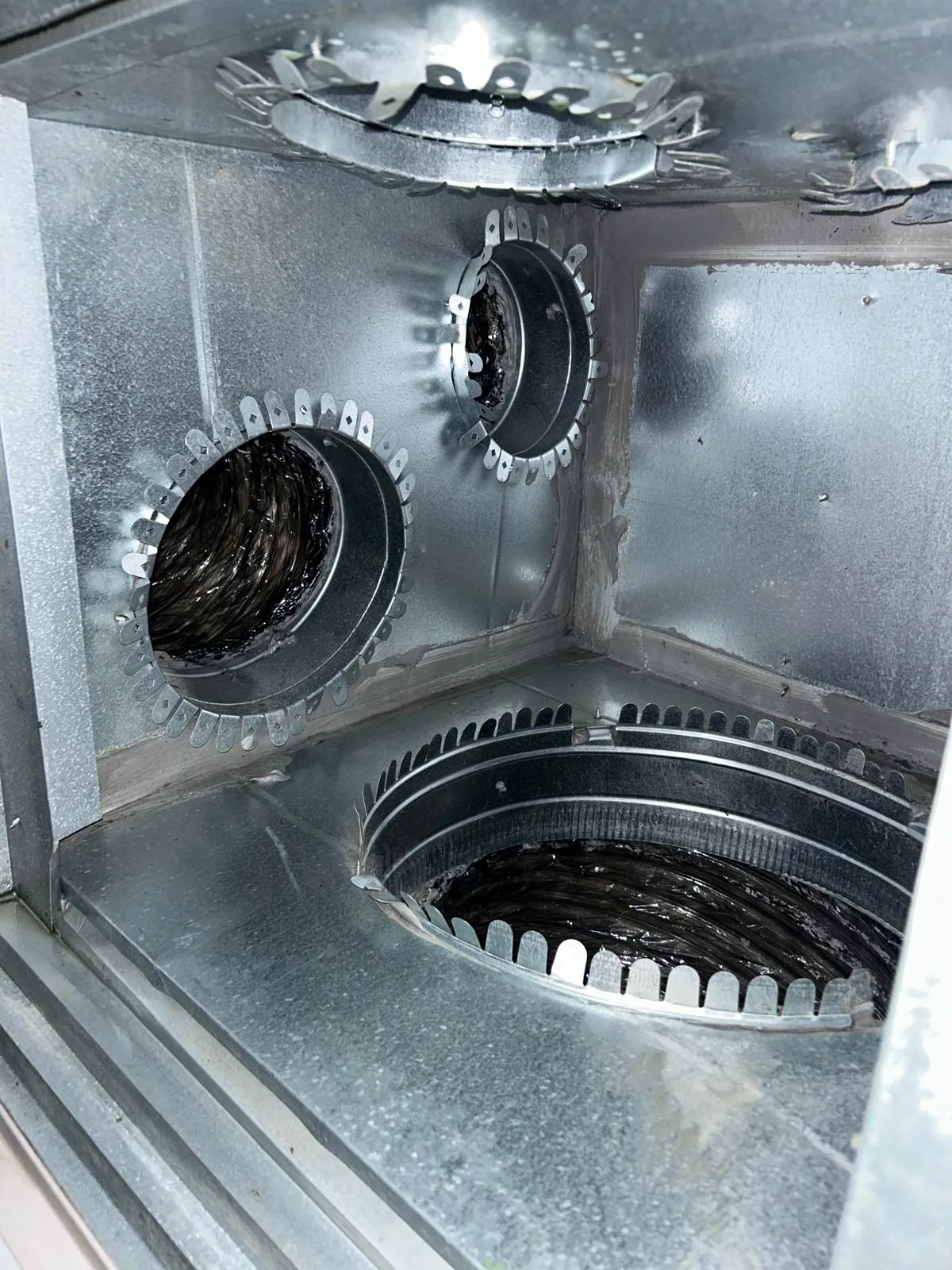
Every unit on the list gets a borescope pass through the accessible supply and return runs and both plenums, photographed. That pass is what sets scope. It is also what lets us hand back a shorter cleaning list than the one you sent us, which is the part managers tend not to expect.
Cleaning on a per-unit work order
Source removal under negative pressure, mechanical agitation in each run, registers and grilles removed and washed, both plenums cleared, fresh filter in. One work order and one photo set per unit. A unit we could not get into is logged as no-access with the date and the attempt count and never rolls into the serviced total.
Closeout in your filing shape
One packet per building, or one consolidated packet across the portfolio with a per-building split. Same layout every rotation, so this year's file sits next to last year's and the comparison is obvious. Invoicing follows the same split as the reporting.
Six documents, every rotation.
Before-and-after camera photos, per unit
Dated images from inside the actual runs, filed against the unit number. A resident who is sure nothing was done can be shown the interior of their own supply trunk.
The skip list, with its evidence
Units we inspected and deliberately left alone, each with the photo that justified leaving it. This is the page an owner reads when they ask why the invoice is smaller than the unit count.
No-access log
Every unit we could not enter, with the notice date, the attempts, and what happened at the door. Handed back as a short chase list rather than buried in a total.
Condition list for the capital plan
Crushed or disconnected runs, failed flex, boots pulled off the drywall, standing water at a condensate pan. Written per unit, with the repair scope, so it can go straight into a budget line.
Filter record
Filter size and MERV rating logged per unit as we go, plus a note where the installed filter was too restrictive for the blower. Small thing, and it saves your maintenance team a season of guessing.
Vendor paperwork kept current
Insurance documents drawn to whichever entities you name, refreshed at each policy renewal rather than when somebody notices the date has passed.
Priced per system, held for the rotation.
A door count does not price this job. What moves it is how many air handlers there are, whether the units are occupied, how the attic or mechanical closet is reached, and how much of the list survives the camera pass. So a property gets walked and then quoted. Once the inventory is agreed, the per-system rate holds for the whole rotation so your budget line does not drift halfway through.
Prices shown are starting estimates and may change with the condition, access, and scope we find on site. Only a written quote from an on-site visit is a price we commit to.
Repairs that come out of the condition list — a crushed run, a disconnected return, a coil holding water — are quoted line by line against the photograph, so you can approve one unit or one building at a time. The individual rates those repairs are built from are published on the pricing page.
Where this connects
The commercial-division detail behind shared risers and master contracts.
HOA and condo boardsSame buildings, a volunteer board instead of a manager making the call.
Odor investigationWhat a complaint call actually involves before anyone proposes a cleaning.
Vendor onboardingCOI, additional-insured, W-9, and the recurring multi-site agreement.
Send the address, the system count if you have it, and how your access works.
One property or a portfolio. We come back with a walkthrough date, whether the buildings are individual systems or shared risers, how the rotation would sequence around turns, and the vendor packet your file needs.
Request a compliance quote
Single-site, multifamily, or national portfolio — tell us the system and the sites.
Property management — FAQ
Do you actually have to be inside every unit?
For in-unit ductwork, yes — the runs, the registers, and the air handler are all behind the door. What we can do is shrink how many entries you have to arrange: turns get cleaned while the unit is empty, the camera pass and the cleaning happen on the same visit rather than two, and units the camera clears are finished at that point with no second appointment.
What happens with a unit where nobody answers the door?
It becomes a no-access line with the notice date and the attempt logged, and we schedule a second attempt inside the same rotation. It is never reported as serviced. Whatever is still unentered at the end is handed over as its own short list for your leasing office to work through, because a gap belongs on the document rather than inside a total.
Can you take a turn on two days' notice?
Often, and turns are the work we would rather have. Empty units need no notice period, no furniture protection, and no resident coordination, so they slot into a schedule far more easily than occupied ones. Give us the turn list as it forms instead of in a monthly batch and the fit gets better.
A resident says the smell came back a month later. Then what?
We come back and look, and if the original finding was wrong or incomplete we say so in writing. Odors that return are usually moisture rather than dust: a condensate pan that is not draining, a coil that stays wet, or a run pulling humid attic air through a tear. Those get fixed at the source or the odor cycles forever, which is why the investigation covers the coil compartment and not only the ducts.
Do you bill per unit or per building?
Either, set before the rotation starts. Per unit reads more clearly when you are recharging costs to individual owners; a single building invoice with a per-unit schedule attached is easier when the property runs on one operating statement. Reporting is cut the same way as the invoice so the two reconcile without anyone rebuilding a spreadsheet.
Can you get approved in our vendor portal?
Yes. Send the requirements and we match them: the exact legal entities to be named, the endorsement wording your risk team insists on, the W-9, and the upload rather than an email attachment where the portal will not accept one. Renewals go up when the policy renews, not when the portal starts sending warnings.
Our mid-rise runs on fan coils off a shared riser. Is that the same job?
No, and it should not be priced as one. The in-unit duct on a fan-coil system is short, so most of the work sits in the shared risers and the common air handling. That is scoped as commercial work with a walkthrough, after-hours access, and containment, not as a stack of residential cleanings.
Last thing
Get it inspected. Get it in writing.
A $99 camera inspection is the cheapest way to find out whether you need us at all — and a real share of them end with “not yet”. Either way you keep the footage.
- Photos either way
- Written quote first
- Licensed & insured
Open Mon–Sun 7:00 AM – 12:00 AM · a person answers