
Get The Build Out Of The Ductwork Before The Buyer Moves In
Construction dust-outs sequenced against your calendar, camera-verified, and closed out with a completion report that drops into the lot file. Send a lot list, not an address at a time.
Coverage documents drawn to whatever entities your trade contract requires, refreshed every policy year.
One visit, and the week it lands matters.
The same crew doing the same work produces a different result depending on which side of final sanding it happens. Here is the honest version of the four points where we get called.
Rough-in
The mechanical contractor sets the equipment and runs the duct. We do not touch it at this stage and we do not review their layout. If a run is going to get crushed by a truss or strangled at a takeoff, that gets discovered later on our camera, and the note goes to you rather than to the trade partner.
After final sanding
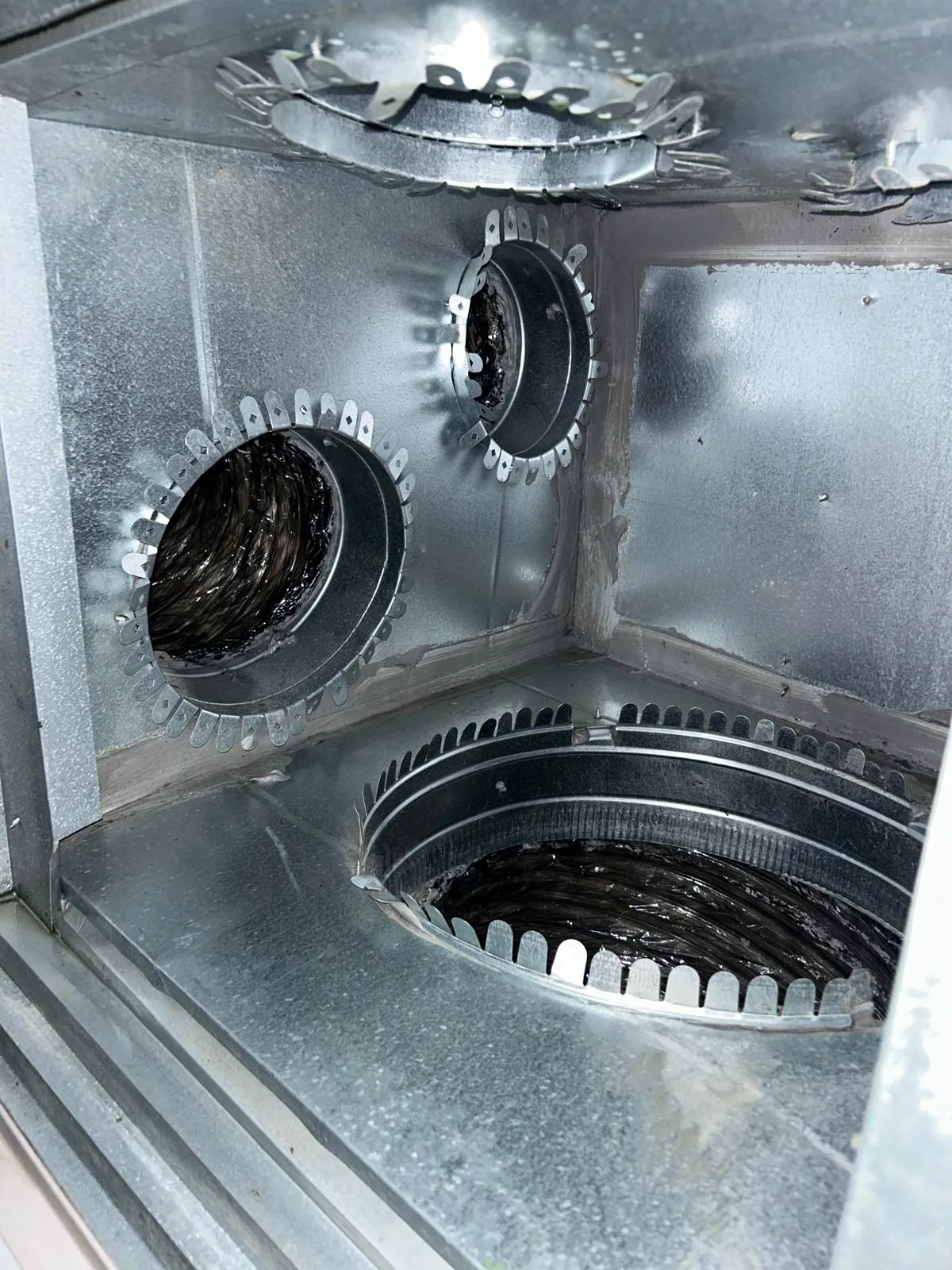
This is where the dust-out belongs. Drywall fines, sawdust, insulation fragments, and tape scraps have been going down open register boots for months, and every one of them is still in there. Cleaning now means the debris leaves before flooring, before cabinets, and before the system ever runs for an occupant.
Before the walkthrough
Plenty of builders call us here instead, and it works, but the schedule is tighter and the trades have to be out. We run the same source-removal pass, verify on camera, and return a completion report within 48 hours so it makes the closing packet without chasing anybody.
Warranty year
A buyer six months in says the house is dusty and blames the builder. Sometimes that is construction debris that was never removed. Sometimes it is a return pulling attic air through an open seam, which is a different repair with a different owner. We camera it and put the answer in writing so the warranty conversation is about evidence.
A new system is not a clean system.
Registers sit open for months while the house gets built above them. The system is brand new and pre-loaded, and the first cooling season is when the buyer finds out.
Drywall sanding fines
The finest and the worst of it. Gypsum dust travels the whole system, coats the blower wheel and the coil face, and comes back out of the supply registers for the first several months of occupancy.
Sawdust and trim debris
Collects in the boots and the first reach of each run, where a register grille hides it from the final clean crew entirely.
Insulation and tape scraps
Blown-in fibers and cut lengths of foil tape end up in trunks and plenums. Bulky material like this restricts flow rather than merely dirtying the run.
Whatever fell in an open boot
Cups, wrappers, fasteners, offcuts. Not a joke and not rare. We photograph what comes out because a builder generally wants to know which trade left it.
A dust-out does not repair a duct system that was built wrong. Cleaning removes debris. It does not add capacity to an undersized trunk, close a leak inside a sealed chase, or rescue a bonus room that never had enough supply. We will measure, photograph, and tell you which problem you have, but we will not sell a cleaning as the answer to a design fault.
Paperwork that closes with the house.
Camera verification, per system
Interior photographs of the finished runs and both plenums, dated and filed against the lot number rather than the street address, so it survives a re-plat.
Completion report
A one-page statement of what was cleaned, by what method, on what date, with the system count. Written to drop straight into a closing or CO packet.
Defect notes for the mechanical trade
Crushed flex, disconnected boots, unsupported runs, missing mastic at a takeoff. Photographed and listed separately from our own work, so it reads as a punch item and not as an upsell.
Filter and register record
The construction filter pulled, the clean filter installed, its size and MERV, and confirmation that every register and grille was re-seated square.
Standing insurance documents
Coverage documents drawn to whatever entities your trade contract names, refreshed each policy year without your contracts administrator having to chase them.
Lot-list scheduling record
What was scheduled, what was completed, and which lots were pushed and why. Sent back in the same format you sent the list.
A house with two air handlers is two systems.
Square footage is a poor proxy for this work. What moves it is the number of air handlers, how many runs each one feeds, and whether the equipment sits in a walkable attic or a crawl space you get to on your stomach. On a repeating plan we price the plan once and hold it across the community, which is simpler for both sides than quoting each lot.
Prices shown are starting estimates and may change with the condition, access, and scope we find on site. Only a written quote from an on-site visit is a price we commit to.
Repair work that surfaces during a dust-out is quoted separately and only with your approval, never added to an invoice after the fact. Those rates sit on the pricing page alongside accessible-joint sealing, which is worth considering while the attic is still empty.
Nearby on this site
The service page: method, duration, and what the completion report contains.
Post-renovation cleanupWhy remodel debris ends up system-wide and how the camera maps it.
Duct repair and replacementCrushed, torn, or disconnected runs put back the way they should have been built.
Contracts and onboardingMulti-site agreements, COI packets, and portal delivery for procurement.
Send the plan, the system count, and the dates you are working to.
One custom home or a community on a repeating plan. We come back with a per-plan price, the window we want relative to sanding, and the completion-report format so your closing packet is settled before the first lot.
Request a compliance quote
Single-site, multifamily, or national portfolio — tell us the system and the sites.
Builders and GCs — FAQ
When exactly should the dust-out happen?
After final sanding, and before flooring goes down if the schedule allows. That timing gets the gypsum out before it can be walked into the house and before the system runs for anyone. The next-best window is after the trades are out and before the buyer walkthrough. What does not work is running it while sanding is still happening upstairs, because we will clean a system that is about to be reloaded that afternoon.
Do you install ductwork or fix the HVAC?
No. We are not the mechanical contractor, we do not set equipment, and we do not warrant anybody's install. Our scope is cleaning, sealing accessible joints, and repairing damaged runs when a builder asks for that specifically. If the camera shows a design or capacity problem, we photograph it and hand it to you, and it goes back to the trade that owns it.
Can you take a lot list instead of one address at a time?
That is the easier way to run it. Send the lots with target dates and we sequence against your schedule, confirm the week before, and send back the same list with completion dates filled in. Changes are expected on a build calendar; tell us and we reshuffle rather than charging a trip fee for a lot that was not ready.
A buyer is complaining about dust in a home we finished. Is a cleaning the fix?
Sometimes, and sometimes not, which is why we look before quoting. If the runs are loaded with construction fines, cleaning solves it. If the returns are pulling unfiltered attic air through open seams, cleaning will look like it worked for about three weeks and the complaint will come back. We will tell you which one you have and what the second one costs to fix properly.
Will a dust-out make an undersized system perform?
No. Cleaning removes debris; it does not add capacity, correct a static pressure problem, or fix a room that was never given enough supply. Where we measure airflow and find the room is starved by design, we say so plainly rather than selling a cleaning that will not change the buyer's experience.
How long does a house take, and do you need the power on?
Most single-system homes run three to five hours, and a second system adds time rather than doubling it. We need power for the vacuum and the air handler, and clear access to the equipment and every register. If the house is still locked behind a lockbox with a trade in the mechanical closet, the visit costs everyone a day.
Do you handle remodels and additions too?
Yes, and it is a different scope. On a remodel the HVAC has usually been running throughout, so the debris is already distributed system-wide instead of sitting near the work. We camera first to map where it actually settled, then clean the affected runs or the whole system based on what the photos show.
Last thing
Get it inspected. Get it in writing.
A $99 camera inspection is the cheapest way to find out whether you need us at all — and a real share of them end with “not yet”. Either way you keep the footage.
- Photos either way
- Written quote first
- Licensed & insured
Open Mon–Sun 7:00 AM – 12:00 AM · a person answers