
Duct Work A Volunteer Board Can Actually Vote On
Common-system cleaning, opt-in programs for owners, and camera condition surveys — scoped in plain language, documented for the minutes, and split so association money never quietly pays for private property.
Insurance certificates name the association and the management company, and are reissued at renewal.
The first question is not what to clean. It is who owns it.
Association duct projects rarely fail on the work. They fail when nobody decided in advance whether the association was buying its own equipment or somebody’s bedroom vent, and that argument surfaces after the invoice.
Common elements
Clubhouse, fitness room, leasing or management office, corridors, and any shared air handler or vertical riser that serves more than one home. In most stacked buildings the riser itself is common even where the branch into a unit is not. This is the part a board can vote on and fund out of the operating budget without asking anyone's permission.
Inside the door
The in-unit air handler, the duct tree fed from it, registers, and the filter. Boards routinely assume they can order this cleaned across the community and then discover mid-project that they are paying for private property or entering homes without a right to. It is cheaper to find that out in a meeting than in a hallway.
Read the documents
Branch duct between a common riser and a unit, exhaust ducting through a demising wall, a fan coil in a closet that opens onto a corridor. Different declarations answer this differently, and the answer decides who pays. Get it settled before scope, not after an invoice arrives.
We do not read your governing documents for you. We are duct contractors, not counsel, and an opinion from us on what your declaration means is worth nothing to a board. Ask your association attorney or management company where the line sits, tell us the answer, and we will scope to it.
Each one has a real drawback.
A board deciding between these deserves the downside of each in the same breath as the upside, so here it is.
Common systems only
We clean and document what the association plainly owns: clubhouse and amenity air handlers, corridor supply and return, the management office, and shared risers where they exist. Scoped from a walkthrough, run after hours or on a weekday morning before the amenities open, closed out with before-and-after photos.
The drawbackSimplest to approve. Does nothing for the owner whose bedroom vent is the reason they emailed the board.
Opt-in program for units
The association arranges the vendor and the rate; individual owners choose whether to participate and are billed directly. The board gets community-wide access to a documented method without spending association money on private property, and we handle scheduling with each owner rather than sending the manager a list of no-shows.
The drawbackParticipation is voluntary, so coverage is never complete. Boards that want uniformity will find that frustrating.
Condition survey for the capital plan
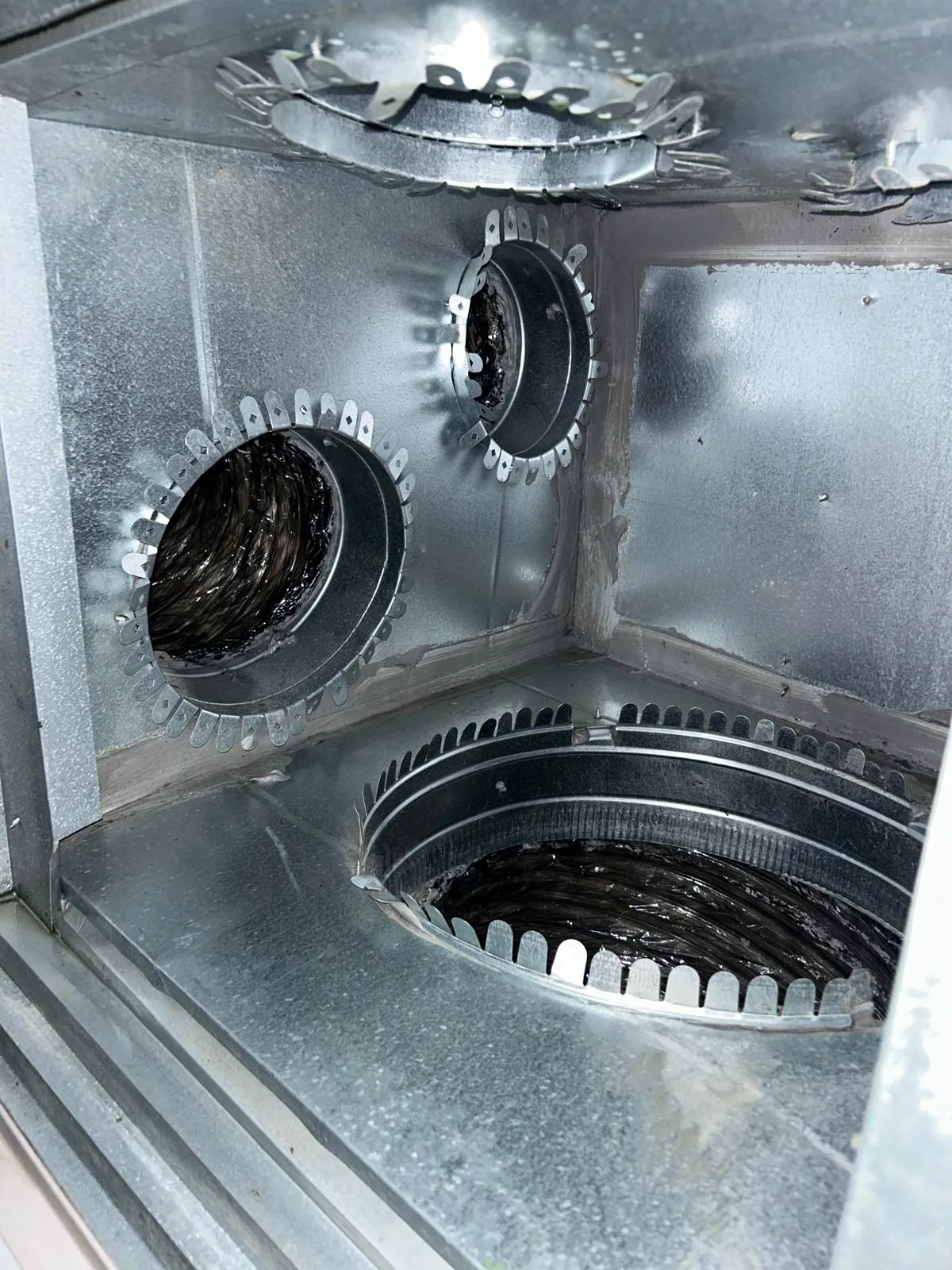
A camera pass across the common systems and a representative sample of units, producing a written condition report: what is failing, what is merely dirty, and what is fine. Built as an input for whoever prepares your reserve study or your next budget cycle.
The drawbackIt is a report, not a repair. Some of what it finds will be work the board would rather not have learned about.
Written to survive a change of directors.
Boards turn over. The packet is built so next year’s directors can open the file and understand what was done and why, without anyone remembering the conversation.
A scope written for a meeting
One page of plain language covering the work, the exclusions, and the figure. Meant to be read aloud at a board meeting and attached to the minutes without translation.
Camera evidence, common systems
Interior photographs of the corridor and amenity runs before and after, dated. The record that answers an owner who suspects nothing happened.
Written condition findings
Each finding stated as an observation with a photo, and separately as a recommendation with a scope. Observations and recommendations are kept apart on purpose, so the board can see what we found without being told what to feel about it.
Owner-facing notice text
The paragraph you send residents about access, timing, and what will happen in the corridor. Written by us so a volunteer secretary is not drafting it at 11pm.
Participation report on opt-in work
Which units took part, which declined, and which never responded. Useful when the same three owners raise the same complaint at the next annual meeting.
Insurance and vendor documents
Certificate of insurance and additional-insured endorsement naming the association and the management company, reissued at renewal.
Common work is quoted per building. Unit work is not the association’s bill.
Amenity and corridor systems are walked and then quoted as one figure for the building, because system count, riser length, access, and whether the space stays open all move the number more than square footage does. Opt-in unit work is billed to the participating owner at the program rate, never to the association.
Prices shown are starting estimates and may change with the condition, access, and scope we find on site. Only a written quote from an on-site visit is a price we commit to.
Sealing, repair, or replacement that comes out of the survey is quoted separately against the photograph that justified it. Those line rates are published on the pricing page so a board can sanity-check a proposal before it reaches a vote.
Nearby on this site
Master-contract structure, shared risers, and the per-unit record.
Property managersThe same buildings written for a manager with a portfolio and a turn calendar.
Camera inspectionWhat the survey visit involves and what the report contains.
Standards and insuranceThe published standards our procedures follow, and what our coverage is.
Tell us the building type and when your next meeting is.
Garden-style, mid-rise on shared risers, or a clubhouse and nothing else. We walk it, then send a one-page scope with a figure, an exclusions list, and the notice text for residents, in time to be read at the meeting rather than after it.
Request a compliance quote
Single-site, multifamily, or national portfolio — tell us the system and the sites.
HOA and condo boards — FAQ
Can the board just order every unit cleaned?
That depends entirely on your declaration, and it is a question for your association's attorney rather than for us. What we can tell you is what we see in practice: common systems are straightforward for a board to authorize, and in-unit ductwork usually is not. When the boundary is unclear we scope the common work, quote the unit work separately, and let the association decide which side of the line it sits on.
Do the ducts really need this, or is it a maintenance line someone invented?
Sometimes it is invented. Federal guidance ties duct cleaning to something you can see in the system rather than to an interval on a maintenance schedule, and we hold to that. A camera pass through your clubhouse and corridor runs settles which case you are in, and if the systems read clean we write that down and charge for the inspection only. A board that can show it checked and chose not to spend is in a stronger position than one that spent without checking.
Will you write our reserve study?
No. Reserve studies are prepared by reserve specialists, and we are duct contractors. What we produce is the input: a documented condition assessment of the air-handling and duct components with photographs, an opinion on remaining serviceable condition, and a repair scope where one is warranted. Your reserve preparer can price and schedule from that. Handing you a document labelled as something it is not would help nobody.
How do you keep amenity spaces open?
By working when they are not in use. Fitness rooms and clubhouses come first thing in the morning or after close, corridors run floor by floor under containment so the space reopens behind us, and equipment stages out of a service corridor rather than the lobby. Where a space genuinely has to close for a few hours we say which hours during the walkthrough, not on the day.
An owner says their unit smells and blames the shared riser. Can you settle it?
Usually. We camera the riser and the owner's branch and look at the coil compartment, because in fan-coil buildings the smell more often starts at a wet coil or a blocked condensate line inside the unit than in the shared duct. The finding goes in writing with photographs either way. If the riser is the source, that is association work; if it is inside the unit, the owner has a clear answer and the board is out of the argument.
Can you bill some of this to the association and some to owners?
Yes, and split billing is the normal shape for opt-in programs. The association is invoiced for common-element work; participating owners are invoiced individually at the program rate. The board sees a participation report rather than a pile of individual receipts, and no association funds cross the line into private property.
We have three bids and yours is not the cheapest. What are we paying for?
Mostly documentation and restraint. A cheaper bid may quote every unit without looking inside one, and the low number gets larger once someone counts the systems. Ask all three bidders for the same thing: a camera pass before scope, interior photographs of the actual runs, and a written statement of what they will not clean. Compare those answers rather than the totals.
Last thing
Get it inspected. Get it in writing.
A $99 camera inspection is the cheapest way to find out whether you need us at all — and a real share of them end with “not yet”. Either way you keep the footage.
- Photos either way
- Written quote first
- Licensed & insured
Open Mon–Sun 7:00 AM – 12:00 AM · a person answers