
Post-Renovation Duct Cleanup in Midlothian
Clear the remodel out of your ductwork when the crews leave.
01Midlothian — the housing record
What Midlothian actually has behind its walls.
Before anyone quotes a duct job here, this is the stock they are quoting against. It is public Census data, and it is different in every city we cover.
- Housing units
- 12,507
- Built pre-1980
- 6%
- Built 2000s
- 42%
- Built since 2010
- 38%
- Gas heat
- 14%
- Electric heat
- 82%
- Single-family
- 83%
U.S. Census Bureau, American Community Survey 5-Year Estimates (2023), tables B25034, B25040 and B25024. Percentages are rounded and describe the city, not your house.
What that means for ducts
New-build ductwork
Roughly 38% of Midlothian's homes were built since 2010. New does not mean clean: the commonest thing we pull out of a five-year-old system is the construction phase itself — drywall fines, sawdust, insulation fiber — plus builder-grade flex that was kinked or crushed on the day and has been throttling that run ever since. Photographs matter more here, not less.
That is a reading of the city’s stock, not a diagnosis of your home. Which of it applies to you is exactly what the camera settles — and why we would rather run one than quote from a postcode.
02Working in Midlothian
The part that changes from street to street.
Two things decide what we look at in a Midlothian house. The first is age. Hardly anything here predates 1980 and most of the city went up after 2000, so the ductwork is builder-installed flex in a vented attic, still on its original liner and rarely dirty from ordinary use. The second is what is in the air outside. This is a cement town, with plants and quarries working along the US 67 corridor, and fine mineral dust does not behave like household dust. It is abrasive, it is small enough to stay airborne, and it arrives through return leaks and the building envelope rather than being generated indoors. Heating is almost entirely electric, so most homes run a single attic cabinet holding the blower, coil, filter rack and heat strips, and that cabinet is where mineral dust actually costs you something, packing the coil face and cutting airflow before anyone notices. In plenty of these houses the useful recommendation is a better sealed filter, not a cleaning.
Mockingbird Nature Park
- Senna Hills ·
- Cypress Bend ·
- Plantation Estates
County
Ellis County
Same standard in Midlothian as everywhere else.
Source removal to the NADCA ACR standard, a written quote before anything is touched, and camera photographs of your own runs before and after. We are not going to re-argue that on every city page — it is set out once, in full, on the service page.
- Camera mapping of where renovation debris settled
- Source-removal cleaning of affected runs or the full system
- Both plenums cleaned and a fresh filter installed
- After photos documenting the reset
- From
- $349
- On site
- 3–5 hours
- Scope
- 4 lines
Prices shown are starting estimates and may change with the condition, access, and scope we find on site. Only a written quote from an on-site visit is a price we commit to.
03Post-Renovation Duct Cleanup — in this stock
The build-out clean nobody did.
In new-construction cities this is the commonest job we run, and the commonest thing homeowners do not know they need. Ducts sit open through drywall, sanding and flooring; the system then runs that straight into a house on day one. A dust-out is cheap, fast, and the photographs make it obvious it was needed.
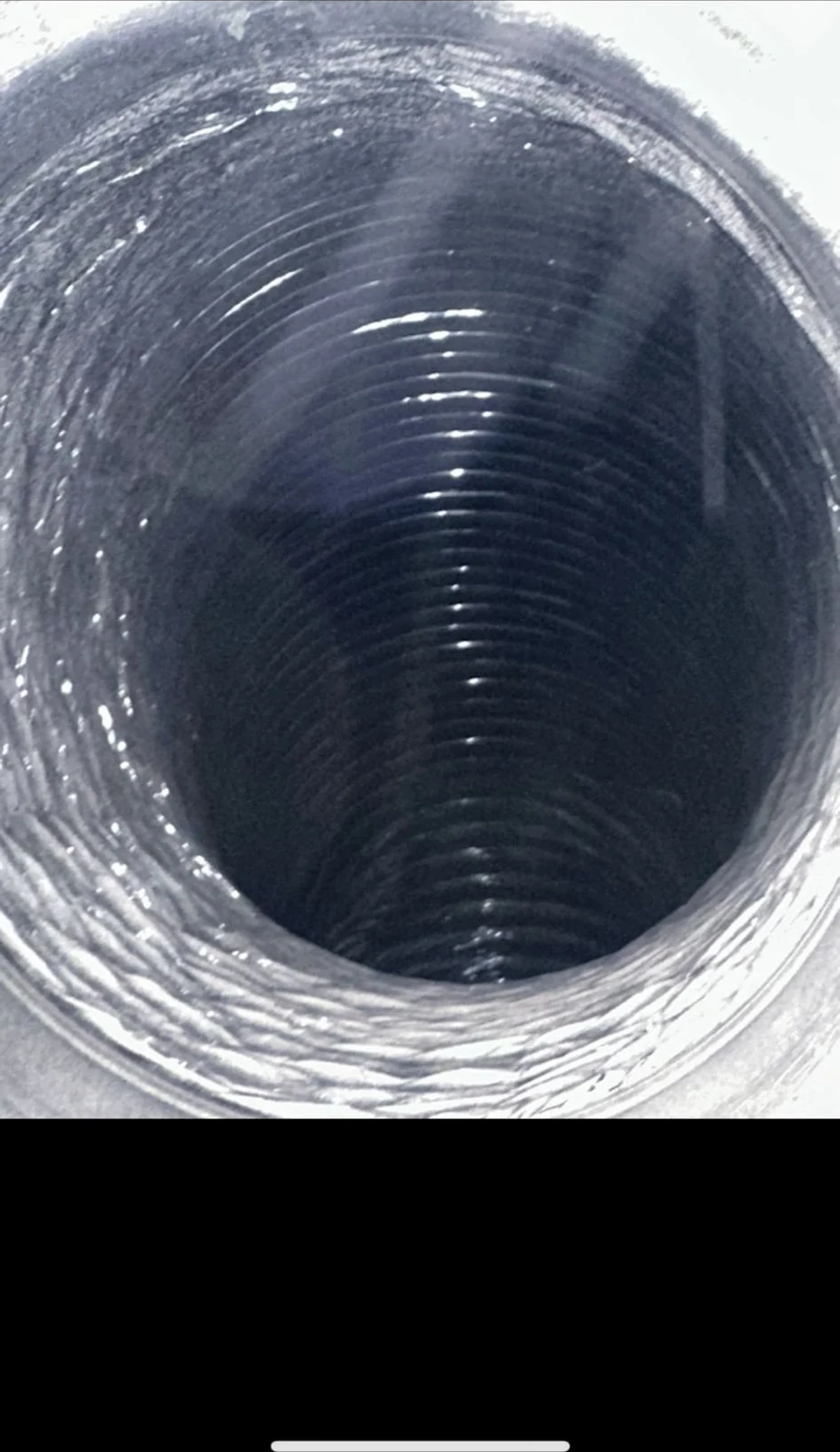
The contractor covered the vents — do I still need this?
Covers on supply registers help, but the return side is where projects do their damage: if the system ran during work, the returns pulled fine dust past whatever filter was in place and seeded it through the system. A camera look settles it cheaply — sometimes the answer is genuinely 'you're fine.'.
How soon after the remodel should the ducts be cleaned?
Once all dust-generating work is truly finished — sanding, cutting, texture, final touch-ups. Clean earlier and you'll pay to do it twice.
04Book in Midlothian
Three fields, and a person calls you back.
Tell us the ZIP and we will tell you what your system likely needs — including, sometimes, that it needs nothing yet. Nothing is charged until you have approved a written quote.
05Questions
Asked in Midlothian, answered straight.
The contractor covered the vents — do I still need this?
Covers on supply registers help, but the return side is where projects do their damage: if the system ran during work, the returns pulled fine dust past whatever filter was in place and seeded it through the system. A camera look settles it cheaply — sometimes the answer is genuinely 'you're fine.'
How soon after the remodel should the ducts be cleaned?
Once all dust-generating work is truly finished — sanding, cutting, texture, final touch-ups. Clean earlier and you'll pay to do it twice. The week after the punch list closes is ideal: the system has already circulated whatever it's going to, and the camera map will show the full extent.
We live out toward the cement plants. Do our ducts need cleaning more often?
Not more often, but you should be looking somewhere different. Mineral dust from the plant and quarry corridor loads the filter and then the coil face long before it builds up out in the branch runs. We check filter fit, return sealing and coil condition first. If those are handling it, a duct cleaning buys you very little here.
Our house was built in 2019 and nobody has ever touched the ducts. Is that a problem?
Age by itself is not a reason. In a Midlothian build that new we are looking for drywall dust left in the boots before the registers went on, flex that was cut long and looped over a truss, and returns undersized for the blower. Those are worth finding. A cleaning on a system that young usually is not.
Our filter looks gray within a month. Where is that coming from?
Usually from air that never went through the filter. Return ducts in these attics leak at boots and joints, so the blower pulls hot attic air and everything in it straight past your filter and into the coil. Sealing the return side changes how long a filter lasts more than upgrading the filter itself does.
Last reviewed: