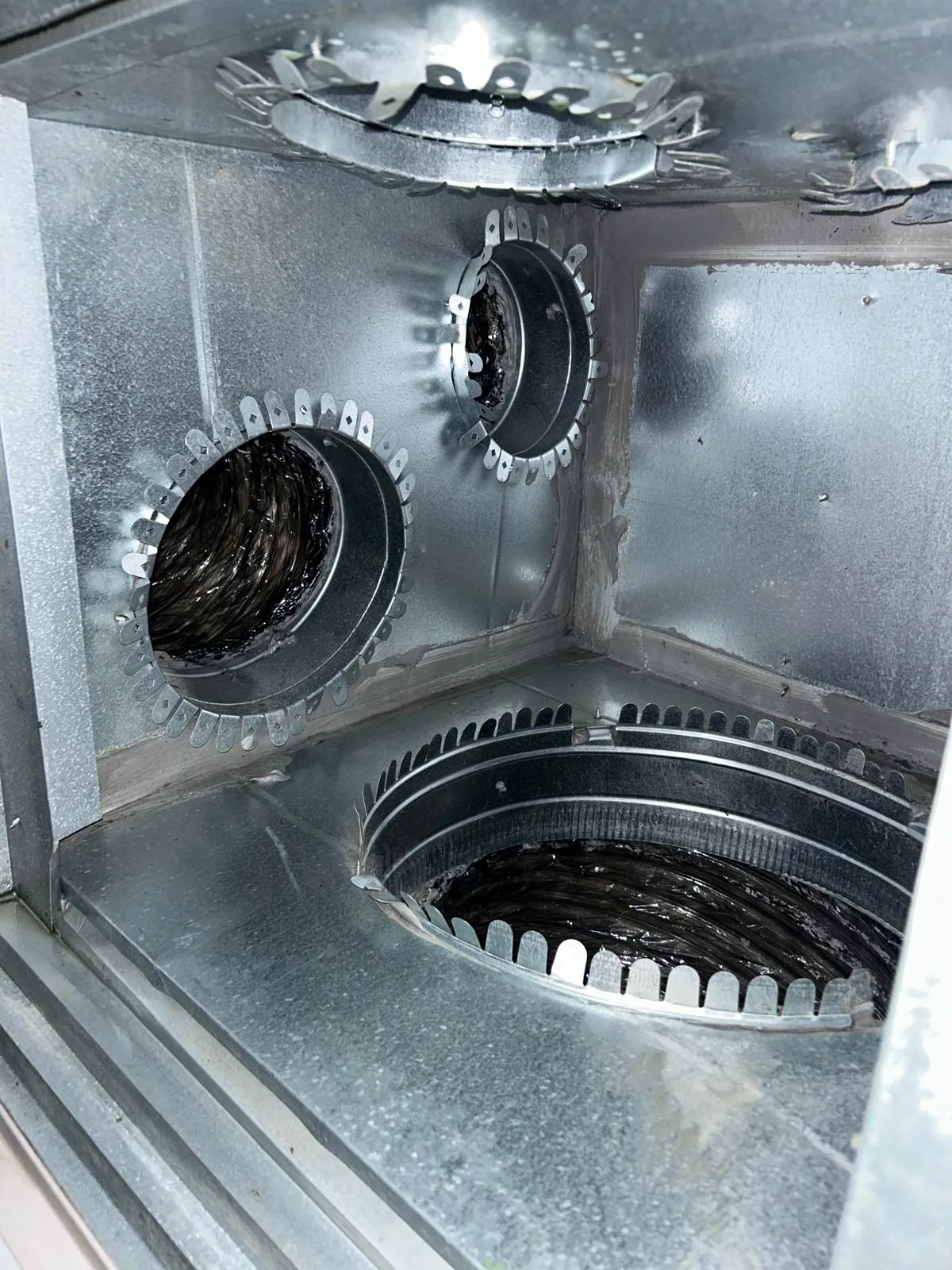
That Musty Smell When the AC Kicks On — Tracking Down the Source
The smell almost always comes from the coil or the drain pan, not the ducts. Working through the likely sources before anyone sells you a sanitising treatment.
A musty smell in the first minute of a cooling cycle is one of the most common calls we take, and it is also the one most likely to end in someone being sold a treatment they did not need. The smell has a small number of likely sources and they are worth working through in order.
01First suspect: the evaporator coil and drain pan
This is where the smell comes from in most houses. The coil is wet all season, the drain pan holds standing water, and if the pan is not draining properly or the trap has dried out, you get biological growth in a warm dark box with air blowing across it.
The give-away is timing. If the smell is strongest in the first thirty seconds of a cycle and then fades, that is air moving across a wet surface, not something in the ducts.
02Second: a clogged or improperly trapped condensate drain
A blocked drain line backs water up into the pan; a missing or dried-out trap lets sewer-adjacent air be pulled back through the line by the negative pressure at the air handler. Both produce a persistent damp smell and both are cheap to fix.
This is a genuinely common cause and it is often missed because people are looking at the ducts.
03Third: duct leakage drawing from somewhere unpleasant
If the return side is leaking, the system may be pulling air from a crawlspace, an attic, or a wall cavity. Whatever those smell like is what your house smells like when the system runs.
The tell here is that the smell tracks with the system rather than with the weather, and it does not fade after the first minute.
04Fourth: actual moisture in the ducts
This happens where duct in an unconditioned space has poor insulation and sweats, soaking the insulation and keeping it damp. It is real, and it is the case where the duct itself genuinely is the source.
It is also the case that cleaning alone will not fix, because the condensation will recur. The insulation and the leakage have to be addressed or you are booking the same visit next summer.
05Where mold changes the conversation
If there is visible mold growth, the priority is the moisture source, not the mold. Killing growth without fixing why it is wet is a temporary result.
And to be direct about our own limits: mold remediation in Texas is licensed work and duct sanitising is not the same thing as remediation. Where what we find crosses that line, our job is to document it and refer you to a licensed remediator, not to sell you a treatment.
Start at the coil and the drain, not at the ducts — that is where the smell usually is, and it is the cheapest thing to check. Be wary of anyone who quotes a sanitising treatment before they have looked at the pan and the condensate line.
Every recommendation here starts from one place: a graded, photographed duct camera inspection — and when it's warranted, a duct odor investigation done to one standard, with a paper trail you keep.
The Prime Air Duct Experts Team
This article was written and reviewed by the CSIA-certified crew at Prime Air Duct Experts. Every recommendation reflects NFPA 211 and CSIA trade standards and the same documented, photographed approach we hold every job to.
Talk to our team